
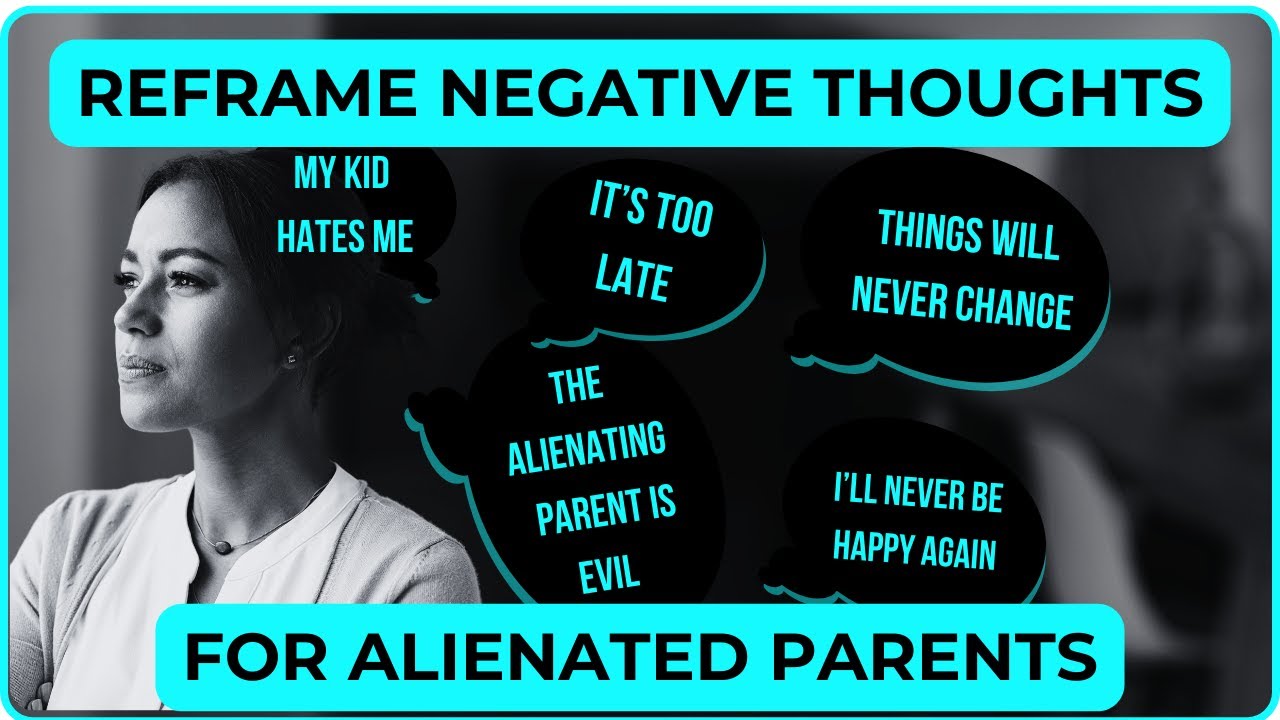
First Impressions: How to Revise Negative Thought Patterns for Alienated Parents
Introduction
In navigating the challenging waters of alienation, parents often find themselves caught in a whirlwind of emotions and negative thoughts. These 'first thoughts' can be immediate and reflexive, often stemming from past experiences and ingrained habits. In this post, I want to explore the concept of first thoughts and offer guidance on how alienated parents can begin to approach these thoughts in a more constructive and compassionate manner.
Understanding First Thoughts
The concept of first thoughts originated from Krista, a fellow coach and teacher, who drew inspiration from a creative teaching approach on TikTok. It's the initial reaction you have to an outside circumstance, an automatic thought that often surfaces without conscious effort. These thoughts can be judgmental, harsh, or self-critical, shaped by our history and experiences.
Our first thoughts often aren't what we truly believe or want to hold onto. Yet, they can feel overwhelming and immutable, causing us to judge ourselves harshly. For alienated parents, first thoughts might revolve around feelings of anger, frustration, shame, or even resentment towards their children or the alienating parent.
Revising Negative Thought Patterns
To begin revising these negative thought patterns, it’s essential to recognize that first thoughts are just that—thoughts. They aren't written in stone and don't define who you are. Here’s how you can begin the process of revision:
-
Acknowledge the First Thought: Allow yourself to note the negative thought without judgment. Understand that having the thought doesn’t make you bad or wrong.
-
Assess Against Your Goals: Consider if the thought is driving you towards your goals or distancing you from them. For instance, if your first thought is, “My child is becoming just like the alienating parent,” ask yourself if this thought supports the loving connection you desire with your child.
-
Generate Alternative Thoughts: Develop a second thought that better aligns with your true intentions. Instead of accepting negative first impressions, choose to think: “My child is their own person with influences beyond just the alienating parent.”
-
Embrace Flexibility: Allow yourself to revise thoughts multiple times. Just like a draft, keep polishing your thoughts until they reflect the belief system that truly supports and uplifts you.
Navigating Challenging Situations
Alienation brings complex scenarios, like when your child doesn’t call as promised. The first thought might blame negative outside influence. Instead, you can reshape this thought by considering, “They didn’t call today but they will when they’re ready, and I will be there for them.” This revised thought allows you to remain open and loving when the opportunity for reconnection arises.
Understanding the Alienating Parent's Actions
Negative thoughts also extend to how you perceive actions of the alienating parent. Sometimes the thought “They’re evil and out to harm us” can arise. Revising this can mean recognizing their actions as a reflection of their insecurity rather than a powerful attack on you. This doesn't change the facts of the situation, but it might ease the intensity of your emotional reaction.
Shifting Lifelong Beliefs
Alienation often cultivates enduring beliefs like “I’ll never be happy again.” By starting from a place of acknowledging this belief and gently shifting to thoughts like, “Happiness can take different forms, and it’s possible I’ve only seen a glimpse of it,” you open the door to new possibilities.
Embrace neuroplasticity—your brain’s ability to change and adapt. While these shifts take effort and conscious intent, they’re entirely possible. With practice, the mind can generate beliefs that feel both true and beneficial.
Conclusion
If you've ever felt stuck or overwhelmed by negative thought patterns as an alienated parent, remember: the initial thoughts are not your destiny. Use them as stepping stones to build new perspectives. This takes practice and patience, but with time you can align your thoughts with the loving future you envision for yourself and your children.
To those embarking on this journey of thought revision, know you're not alone. With every first thought challenged and revised, you're creating a pathway to not just survival, but thriving amidst the challenges of alienation.
Episode Transcript
You are listening to the beyond the high road podcast with Shelby Milford episode number 109 stay tuned.
Hi guys, how are we doing? So today we are going to be talking about. Something that I want to give credit to another coach, fellow coach who went to the same school as me.
In fact, she taught at the school that I went to. and her name's Krista. it's something that her and I, I know we already use, just coming from school that we did,
and I know you've heard it from me in a different way. Um, but that is first thoughts.
, she got this idea from this, this, this teacher on TikTok who teaches fourth graders, I think.
First graders, fourth graders, fourth graders. and I went and found the video just to watch it myself. and she teaches them about first thoughts.
Something happens outside of you, some circumstance happens, right? And your initial thought that you have, the way that she was describing it to these school kids was like, Sometimes it's not such a nice thought, right?
Sometimes it's a judgment, a pretty harsh judgment. And it's what occurs to you knee jerk reaction in the brain, just based on your history and the incidents that have all happened in your life up until today, right? And you're not bad or wrong for having that initial thought, like any thought that occurs to you.
And I'm sure you've heard me say some iteration of this. Um, Throughout our time many times together right on these episodes, any thought that occurs to you is is okay it's not unacceptable or Doesn't make you a bad person. You are not your thoughts, right?
But oftentimes the first thought isn't the one that you want to hear To go with, right? , but just because you have it, oftentimes we'll judge ourselves for it, like, Oh my gosh, that was so what's wrong with you.
Why would you think that, especially if it's about our own selves, or about those that we love first thoughts with our children. I have spoken with so many, I've alienated parents, parents like you and I, that carry, so much shame about their anger or their frustration, their judgments that they have about their children.
they torment themselves. as a result of those thoughts merely occurring to them. My child is a brat. My child is turning into the alienating parent. My child is selfish.
My child is, Disrespectful, Some of those thoughts you do want to keep. I don't know if any of those thoughts are actually going to work for you long term, right? They may not get you to where you want to go, but that's what first thoughts are for, I gave you the idea the other, maybe a couple of weeks ago, right before the hurricane about cave thoughts, right?
Oh, that's just a cave thought. No worries. Burst thoughts though, I think gives you a more actionable direction, I guess. cave thoughts. I love that idea and I use it all the time but cave thoughts just Allows you to let the thought be which I think is essential sometimes there are times where it's a shamey thought that you've done the work on like You're not worthy or maybe this isn't going to happen for you that you can just be like, okay.
All right. I hear you brain that you're saying those things to me, but I'm just not going to pay attention to you because we've already done the work on that. Right. Does that make sense? Where first thoughts are like the initial reaction that you have. Maybe new thoughts, maybe not, but
it's the initial reaction thought that you think oftentimes so subconscious that maybe you think you dismissed the thought, but because this is how your brain has been operating for so long, you, accept it as a fact. For instance, let's say your kiddo said that they were going to call you on Tuesday at 10 a.
m. and, they didn't call you. So in your mind at 10 a. m. you look at your clock or you maybe you've been waiting for, if you're like me, you've been waiting for days, but probably an hour beforehand, like, make sure you look at your phone, make sure you're watching your phone, right? And when they don't call.
the immediate thought is the alienator told them not to they must be stressed out by what the alienating parent is doing to them. They must be feeling a lot of pressure right now. And so in that moment. it would be my temptation, I guess, it would be my inclination to accept that thought as fact.
I make that story about what is happening with my kid, When, in all actuality, we don't really know. But let's put fact aside for a second. Whether it's true or not kind of doesn't always matter.
You know what I'm saying?
It's, is it driving you
towards what you want or is it keeping you distant from that?
So like, if I'm thinking, oh, my kid must be feeling a lot of pressure and that's why she's not calling me. Um, which is purely hypothetic, by the way, because I haven't spoken with my kid in since last October. It's actually been a year. You know what? It's actually been a year and about a week, but I could think that the alienating parent is putting a lot of pressure on my kid. and say, that's just my first thought. That's just the initial reaction thought thought's not going to drive me to feeling and acting toward what I actually want in life.
So my second thought could be, Okay, she didn't call now, but she will call when she's ready. And I will make sure to be there for her, because if I accept that first thought into my brain as like fact, it might be harder for me to show up in the most loving, way whenever. If ever she did call, right? I might feel more, um, suspecting, like I might wanna probe on the inside. Maybe I hide that,
so I either push too much or don't show up as myself at all. And I stay quiet and tense and guarded. And that, affects our connection, right? Our, my idea of how we're connecting anyway, you know, because I'm being careful.
A better example would be, and we talked about this a couple couple months ago a couple few months ago is my kid is acting just like the alienator their carbon copy of the alienating parent. Right. many parents out there, I know, will make it a fact that kid is only being influenced by the alienating parent, so it's inevitable that they're going to turn out just like the alienator.
That's the only guidance they have is, by this narcissist alienating parent. So they're just going to repeat history and be just like them. They're going to be disrespectful, be, dismissive and devaluing you and all the things.
So maybe that's what you think. You think they're turning into the alienator. So that's your first thought. And maybe you've thought it a lot of times, but for that instance, that's your first thought and when you label it, this is just my first thought again, it gives you direction.
Like, there can be a revise of this. If we want. Maybe you're not ready for it, but it's just my first thought. I don't have to go with this and make this fact in my life, make, bring this on as part of my narrative if I don't want to. Is this thought moving me toward or away from what I want for my future?
For how I want to feel today and moving forward, and if you already know that it's not, then you can go straight into revising to your second thought, right? And so the second thought might be, well, I know for sure that they are two separate beings.
The alienator was made by. Two of Their own parents, and my child was made half by me and half by the alienating parent. That doesn't mean that they're automatically going to turn into the alienator. In fact, that's impossible. So the second thought, if I were to simplify it, would be my kid isn't actually turning into the alienator.
Now, you may, like, feel, uh, about the second thought, so you could go back for a third thought, or a final draft, you can have as many draft thoughts as you want, right, but the third thought might be something like
I know that this is not truly who and what my kid is. And it doesn't have to last forever. This doesn't have to define our relationship for the entirety of it.
This isn't the end. This is just the middle of our story. We're not even at the story arc yet. There's so much more lifetime to go. In fact, if they're still under 18, this is just the first quarter fifth of their life, There's so much more life to live for them and for me.
So, because oftentimes what we tell ourselves is it's too late, if it hasn't changed already, it's never going to change, especially if your kids are in their 20s or even 30s, right? It's too late, things will never change. But I just want to offer , this is also a thought that you can revise, it will take work because it's so practiced, right?
You don't most often these kinds of thoughts. I'm not worthy. , things will never change. I will never be happy again. Those kinds of thoughts you have. Come to believe over a long period of time. You've been collecting evidence to support that very thought belief now, right? It's not like you intentionally go out and decide that you want to believe that you're not worthy or that, You'll never be happy again, right?
It's just that over time you've collected all the evidence and sort of accepted that in as one of facts of your life, but it doesn't mean that you can't change it. Neuroplasticity. You can change these thoughts. It's just going to take effort. It's going to take, you applying, using a method method that I actually teach my clients in order to change these default thoughts.
It doesn't happen overnight. So if you think, well, that sounds so great, Shelby, I love this idea, but how come it's not working for me? I have clients that, um, I'm thinking about one client in particular, but, , that this is the default thought. It's not going to work. It's not going to work for me. Maybe it works for everybody else, but it won't work for me.
so of course, whether he likes it or not, he knows that thought isn't. working for him, but because he's already accepted that into his core beliefs, that he's out of help's reach.
Then he is going to prove that to be true without even trying. His subconscious is already like, that's a built machine. So in order to interrupt that belief, he's got to apply A method, in order to dismantle that belief system and then
intentionally. Rebuild it right with thoughts that are actually useful to him and the same for you and the same for me That's what I did and it doesn't happen overnight. So If you have been listening to the podcast for a while and you're like, yeah, these are the concepts all sound great But I'm still feeling miserable , I feel better than I did.
And I it's, I feel comforted knowing that there's a solution out there, but it doesn't seem to be working for me. Well, this is why it's because you can have all of this information and I think it can be a huge help to have all of the information that I share and whatever else you're consuming out there, there's other information. It's also good out there. But me anyway, until I applied it in a very specific way. With the method, then, I continued to re it kept just coming right back around for me, like popping up like guacamole, right? And so it became very tiring and frustrating and, you know, not efficient. And so of course your core beliefs you end up defaulting to those, cause it just seems so tiresome apply the new thinking to your everyday life.
Does that make sense? basically it just takes you doing the things in a it's a system. Okay. Okay. So back to first thoughts.
Another, , thought is the alienating parent is evil. They're evil. They're dangerous. This is one that's usually so many of us stop at that thought and we don't further explore and decide on some revisions. We think that by thinking that they're dangerous, that this is helping us and keeping us aware.
What, if you look back at your history or like think that thought right now, if this feels true to you, how do you show up when you're thinking they're dangerous, they're evil? They're, nefarious, usually it has you showing up in a way that you're coming from fear.
And coming from fear, you're not, most of the time, really, you're not going to act in the most, um, up leveled way, right? You're working from a different part of your brain that does not use your reasoning, executive functions. So, the second thought could be, certainly are acting in ways that I don't like and feel threatening to me.
But it's possible definitely possible that I could get to a point that those actions don't feel threatening anymore. And I know this to be true. Like, true, true, for me. Where before, some of the actions or things on their part that they would do, the alienating parent and his wife, , I was , terrified of What they were going to do based on the emails they would write or knowing just because of history, they're pretty predictable, right?
I was constantly feeling threat coming from their direction because of what they did. They haven't changed. I don't believe that they've changed based on the fact that they're still alienating my kiddo from me. They haven't changed at all, but I today
their actions, their intentions. Don't threaten me the way that they once did, so it is possible for you if that's where you want to get to, to not enter stress response every time you say or think their name, because in a stress response, you're not going to be your best advocate, you're not going to be your child's best advocate, obviously.
Right. So there's a, there's an up level thought that you could think if you wanted to. If it's not moving the needle toward where you want to go. what's the second thought for you? And then what's the, maybe there's a third thought. Maybe there's even a fourth thought there for you. It's possible that they seem dangerous right now, but that's because I'm thinking that they can threaten yada, yada, yada,
really, their actions are only speak volumes about what is happening inside them and their insecurity about whatever's at hand. I was talking with somebody, um, the other day, and then I was thinking myself about, The alienating parents last ditch efforts, like for instance, right before kids turn 18, you know, like that 17, 18 mark, you think that nothing else can happen.
And I'm not trying to instill any fear in anybody, but oftentimes there's like this last little dig that they will try to do. And that dig, if you allow it to, can feel so life altering. Right. But really it is exactly what it is. It's the last little dig. Like I read on one of the Facebook groups. I read this a lot where the kid is almost 18 years old and all of a sudden now they want to change their name.
They're 17. They're about to finish high school. And all of a sudden now they want to change their first or their whatever name tied back to you. They want to now change it. They want to change the legal status of who's their parent. and this all happens right at the cusp of right before they graduate high school or whatever.
And so if that's the case for you, you could think of it as. God, just when I think that they can't hurt me anymore, oh, they turn the knife in and they twist it. Right. But how I think about that this is the alienating parents clear, insecurity, like they have to get that punishment in again, because they're not feeling settled.
Right? You don't have to actually make it about you. I know it affects you. I know it affects you, but it affects you as much as you allow it to affect you. If you tell yourself that it's the end of the world, that they've done this, then of course it's going to feel like the end of the world. Right? I'm not saying you want to feel good about it.
Just know that. I'm just saying you can allow it to really, like, gut you from the inside. Or, you can remember that, really, clearly, if they're making these last ditch efforts, that's exactly what they are. And, clearly, the alienating parent is not happy. And not that you want to use that to make you happy, but you can use that as information and probability, knowing the dynamics of, this phenomenon, Of alienation, if all of a sudden it's been super quiet and then now shit's like stirring up and they're wanting to go back to court, or kiddo is now, things have been going well with you guys and the relationship seems like it was on the mend and boof, something blows up, out of nowhere, you know for sure that it's, Because, well, maybe we don't know for sure, but we can pretty much guess that that is because alienating parent is feeling not so good about their life.
Maybe they were being distracted before by a new significant other or a new job or whatever. And so they didn't really have time or this headspace to pay attention to what was happening with kiddo, right? And so during that time you were able to get close to them and all of a sudden things blow up. Usually we can trace that back to something's going on in alienating parent's life, where they are needing validation, the extra reassurance that they're the only one in kiddo's lives. again, don't use this information against you and against your situation. Use it to benefit you and not to keep you in a ruminating place.
All of this, right? But it's always nice to consider all of the possibilities as opposed to only thinking that this is an attack against you. Yeah, it may be, but the attack is happening because the alienated parent likely is not feeling great about themselves. So it's really, they are feeling attacked because of their own thoughts about themselves.
You know what I'm saying? Just perspective about everything. And you don't need to make that your truth either, that, Oh, the alienating parent feels so bad about themselves that they have to attack me. You could, again, you could use that information to, to really fuck with you and feel unsettled on the inside and like activated and angry.
Or you could just use it to explain what you believe to be, if it's working to cause you to feel, Less attacked and less, of a personal thing. You know what I'm saying? Then use it that way. Don't use it to fuel the fire. That's what I'm saying. Okay?
So some other first thoughts that we think, , I'll never be happy again. Second thought could be, it's possible, It's possible that I could be happy again. Maybe happiness looks different these days. Maybe
like here's where I just start to poke some holes and say like, well, was I happy before? And not also, you want to use All the information that you get from me and from all the other people for you to benefit you to move you toward where you want to go.
Don't use the information against you because it's only going to keep you in the same spot and maybe even worse feeling worse about your situation. Right? So whatever I offer you like, um, What I, what just made me think about this is like, I'll never be happy again. And then I was like, well, was I happy before you could take that and be like, Oh, well maybe I've never been happy.
Maybe I'll never, ever experience happiness. I didn't even know what happiness was then. I thought I did, you know, you could go down that path your brain loves that because your survival brain would love for you to do that because it keeps you in this spin cycle of not doing anything.
You want to use it for you. So it's possible that I've only experienced a slice of the happiness that I will experience. A slice of the joy that I will experience.
Coming up, that could be your second thought. Your third thought could be, who says I'm not happy right now? Maybe, I'm happy and I could experience joy in this very moment, right? Kind of like what I was just suggesting about experiencing and allowing for all the emotions all at once. You know, or at any given time in your life that maybe happiness isn't the true goal, right?
Maybe I want to experience more than happiness. So maybe I won't just be happy again. And maybe what happiness was then was the 2D. Version right of what my life could be moving forward because even though alienation happened and it's felt like the worst thing that's ever happened to me.
Maybe this was my portal to open up my entire world. Yes. I will always feel sadness and feel deep. Grief for missing out on the memories and the time spent with, for me, my daughter and for you, your children and that, you never want to feel good thoughts about that part, right? You can hold that truth, but then also know that this whole situation of alienation was, for me, it was definitely, I see that as like my portal into this technicolor, like, Full HD world that I live in today because I don't just experience fleeting moments of joy, bliss.
like I did back then. Now, I experience all of the emotions, all of the textures, and it makes it that much more vibrant. I've never felt so alive, more alive, than I do today. After. This tragedy of alienation, you know, so
I guess that the final draft of that for me is I'll never be happy again. Maybe that's okay. Maybe I'll be more than happy. Maybe , by experiencing this alienation, I have access to so many more emotions, so many more degrees and intensities Of f joy in all of the things, you know, and I know that you and I have talked about that, All right, maybe another one I've got written down, um, okay, one that we visited just a few episodes ago. My kid hates me, right? You couldn't make that a truth. Many of you have. That is like a fact in your mind. No, I know it's a fact. My kid hates me. My kid absolutely hates me. But that is not a fact. That may be your fact in your brain, but that is not a fact that could be proven in a court of law that if aliens came down onto this earth and you explain My Kid Hates Me, how would they know how to judge that?
They couldn't. Even if you gave them all the evidence, it still is a very subjective point of view. Right? So if that thought causes you to feel icky inside, which nobody wants to really think about, and like mull over marinate and roll around in thought that anybody hates them, right? So maybe the second thought would be, maybe that's what I think right now, but who knows?
Who knows what's actually going on? And the third thought could be,
no matter how my kiddo thinks about me right now, I know, and how they feel about me, I know that I am 100 percent lovable, and 100 percent worthy, and the only reason that it seems like it. They hate me right now is because of the way that I'm seeing it. And if I continue to think, and now this is a paragraph, a third paragraph, but if I continue to think and believe that my kid hates me,
my subconscious is going to find all the evidence to support how my kid hates me. But if I thought maybe my kid loves me, maybe your brain will go to work to find all the ways that your kiddo might love you. Maybe this is love. Maybe this is trust. Maybe because my kiddo feels, you know how they say like, it's the greatest compliment when your kid goes over to somebody else's house and they're so, like, nice to them, but when they're home with you, they're total disasters, right?
They're like, little monsters. You know what I'm saying? But they're so nice to other people. Who knows? Who knows if that's not the case with this situation of alienation? Of course they feel comfortable being mean or dismissive of you because they know. Here in their heart that in the end, you will always love them and they do love you for that, but maybe they're taking a little bit of for granted right now because they're being coerced by somebody else, so maybe it's possible that my kid is really, this is their way of showing love to me and I know I've read so much data by the way, you guys to prove that this is true.
You know, the, chosen parent, the authentic parent. So, my kid hates me is just a 1st thought, another thought, another first thought, I can't handle this anymore. I can't handle this abuse. I can't take it. Right. That's the first thought. It may have become a belief. You may have thought it a lot, but maybe you want to revise that. Maybe you want to, the second thought could be, it's possible that I can handle anything that comes my way.
It's possible. But if I'm looking for ways that I can't handle it, right. And how it's hard. I'm going to be only focused on how it's hard. But if I decide to say possible that I'm not, this isn't. Nearly as much as I really could handle, and I know that to be true, you know, it's only a matter of how much pressure we're putting on ourselves, it's only the narrative about what you actually are handling, because you only actually have to handle what you decide, you know, it could be that I don't even have to handle this, like, there's nothing to handle.
Maybe you could decide, third thought, that. There's nothing to handle here. Child or whoever
is
being mean to me, that's about them. So there's nothing that I need to do here about their thoughts, feelings, actions, The only thing that I handle is myself. So you can handle anything, right?
What's the next move for you? Of course you can handle anything. So
the third thought could be, I can handle anything that comes my way. I know that I already have, and I can handle more. I know I could handle even more if I'm focusing on what is mine, what is actually in my control, right? I can handle it all. It's okay. All really handling is, is you managing your thoughts your emotions and the actions you take as a result.
So as long as you're looking at things in a way that is handleable, then it's entirely possible that's in your control. Right. But when we think life is out of control it's so, um, unpredictable, life is unpredictable, then it's very difficult to get a handle on our own thoughts. . When we think things are flying at us, things are coming at me from all directions.
Pressure is coming from everywhere. Those are all first thoughts. Right? What's a great second thought there? Especially when we're talking about, like, we could do this too, like when we're talking about other people and their actions and how they're being rude or not nice or they're being whatever, you know, they're being.
Those judgment, those knee jerk judgment calls. You can have those thoughts, but that doesn't mean that those thoughts, that you're bad for having those thoughts, those thoughts occurring to you, or that you need to continue to think the thought. It's just a thought. It could just float in and out, and you could be like, Mm, I don't love that one for me.
Because it's really not creating, it's not on brand for where I want to be. it's not the tone that I want to continue to take. That's all. It doesn't mean anything about you.
So often we want to make all this stuff like, Oh my gosh, if that thought occurred to me, then that must mean I'm a bad person. Must mean I'm, you know, evil, terrible. That I'm really fucked up. beyond help. I'm not fixable. There's been too much trauma. Too much drama. Too much , hurt and pain in my life that I carry that I cannot seem to get through.
And so that's just who I am for the rest of my life. I just want to tell you that that is you causing yourself to handle a lot more than you really need to because nothing, nothing in life is permanent, even in the brain, if you don't want it to be. there are many thought upgrades that you can perform throughout your day and , not the first thought, not the second thought, not the beliefs that are in you, none of those things are forever or need to define who you are today and what you're able to create moving forward.
So, also first thoughts are a great concept to use if you are wanting to overcome a habit maybe you drink to Manage your thoughts and emotions. And now it's become such a cause effect thing that you don't know how to stop it. So when you get the urge, like, you get the feeling in your stomach and the thought is occurred to you already. Like, let's go to the store and get wine.
Or. Oh gosh, I really need a drink right now. whatever, However it works for you. And it doesn't have to be drinking. It could be anything food, same thing. I need to have that whatever in the fridge. Extra appetizer, right? That's a first thought. That's all that is.
It doesn't make you any more or less addicted. It doesn't make you any more or less able to overcome. It's just a first thought. It's a thought that occurred to you because of your habit brain. And because of the way you've operated until now.
You can absolutely revise that thought. It's not sacked. It doesn't have to continue to rule you. Right? You can allow for an urge to come. Feel the urge and still move on to another thought and not let that thought become the second, third, fourth, and then turn into a belief and your destiny, you know,
the second thought could be, maybe I don't need to eat. Maybe I want that thing now, but I know that future me does not desire that. It's possible that I could still go on living and breathing, moving through life, without consuming that thing. That's your good second thought.
It's possible that I will still live if I do not eat, eat or drink that thing, smoke the cigarette. It's possible. In fact, It's probably even more possible that I will continue to live, go on living without doing the thing, It's possible that I could improve my health, Improve my state of mind, my state of being by not doing the thing. But right now, it's just a thought. It doesn't mean it's what's going to happen. And then your third thought could be, It's okay to want that thing. I don't have to follow through if I don't want to. Instead what I really want from the whatever you want to consume. Is to feel satisfied. satiated. Right? To feel loved. Maybe what I really want is a hug. I know that sounds cheesy, but honestly, a hug can satisfy. Like if you give into the hug from somebody, and if some of you got to find a good hugger, a hug will actually satisfy you much more.
during an urge than fulfilling the urge because it's really just the and I know I got off a little bit on a different subject here, but it's really just the building up to doing the urge right to answering the urge. That is the habit part of the brain. It's the, it's the pursuing it. And once you get it, there's not like any fireworks or anything.
It's just usually like a, okay, I got it. It's a release. Right? But you can get that same release with a lot of other things. Get creative. okay. So, that's first thoughts for you. It's just a little bit different concept than like I said, the cave thoughts
or like thought upgrades. It's actually like a much more solution focused way piece. Simplified solution focused way because I think most of the time What we all do is make those like i've been saying is make those first thoughts mean something about our character And who we are or somebody else's character if we're having to do the judging on somebody else And we try to read into the whole situation that's happening and what their intention is or what your intention is or how fucked up your past is and It gets all like it starts going into these deep belief systems but really you could just be like Well, that was just my first thought.
That was just the first one. I can have other ones about this very same thing. This was like the raw thought let's, it doesn't mean anything about me. It doesn't have to mean anything about them. There's revisions of the same thought that I want to stick with. My first thought doesn't have to be the end all be all.
And usually we don't want to commit to that thought for long term, . Don't let that be The end of the conversation with yourself, so, okay. I'm hungry. I gotta go eat. That's what I have for you. Have a lovely day.